Fashion, Memory and Women’s Public Identity Through Displacement
There are clothes we wear, and there are clothes that seem to carry something with them.
The Sudanese toub belongs to the second category.
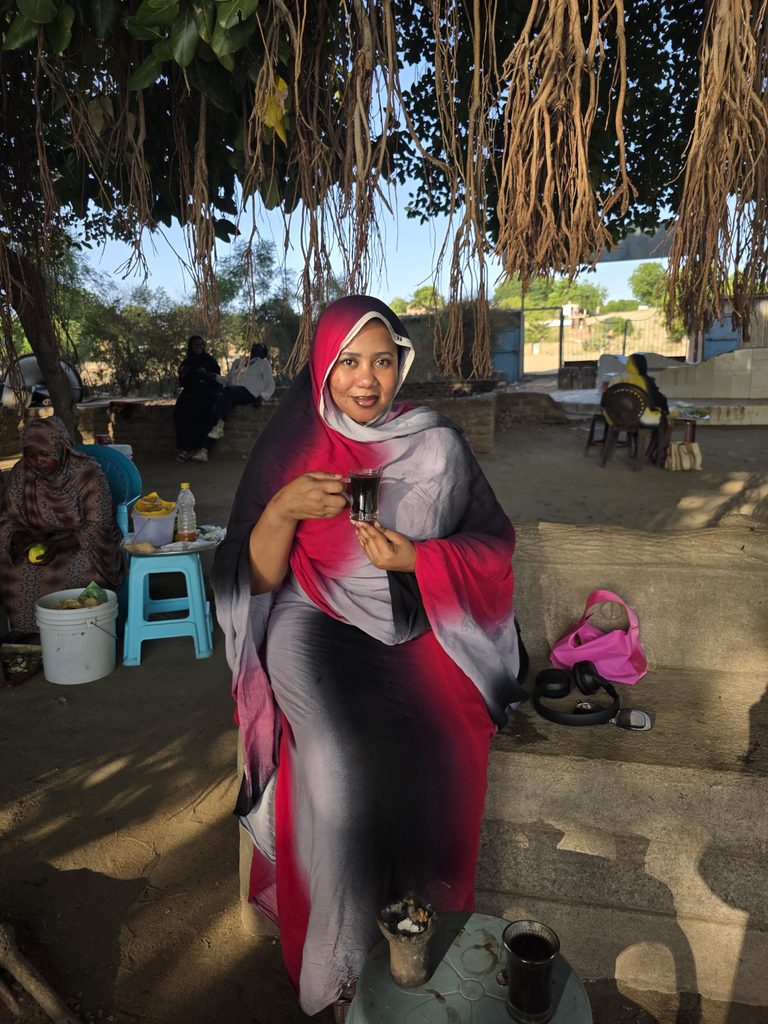
At its simplest, it is a long piece of fabric wrapped around a woman’s body, often covering the head and falling around the shoulders. But describing it by its shape misses what makes it meaningful. For me, before it was fashion, tradition or identity, it was my mother.
She did not like the cloth falling too low from her hand, so she would hold part of the toub up with her index finger as she walked. As a child, that was the same finger I reached for when I wanted to hold her hand. I did not understand the symbolism then. I only knew that I could reach for that finger and find my mother there.
Maybe that is why, long before I had words such as displacement or cultural memory, the toub already meant safety to me.
Even now, I often keep one close when I sleep. Sometimes it is beside me, sometimes beneath my head. Its presence is enough. The things we grow up touching and seeing become part of the body’s understanding of home long before we consciously decide what home means.
Its colour may suggest celebration or mourning. Its fabric may say something about an occasion, a generation or simply individual taste. The way it is wrapped changes from one woman to another.
My mother has her own way. She secures part of the toub at her shoulder, then wraps the remaining fabric around her head and body. Once fixed, it stays in place. She does not spend the day adjusting it. You give up a little of the perfect fall of the cloth, but you gain ease and freedom of movement.
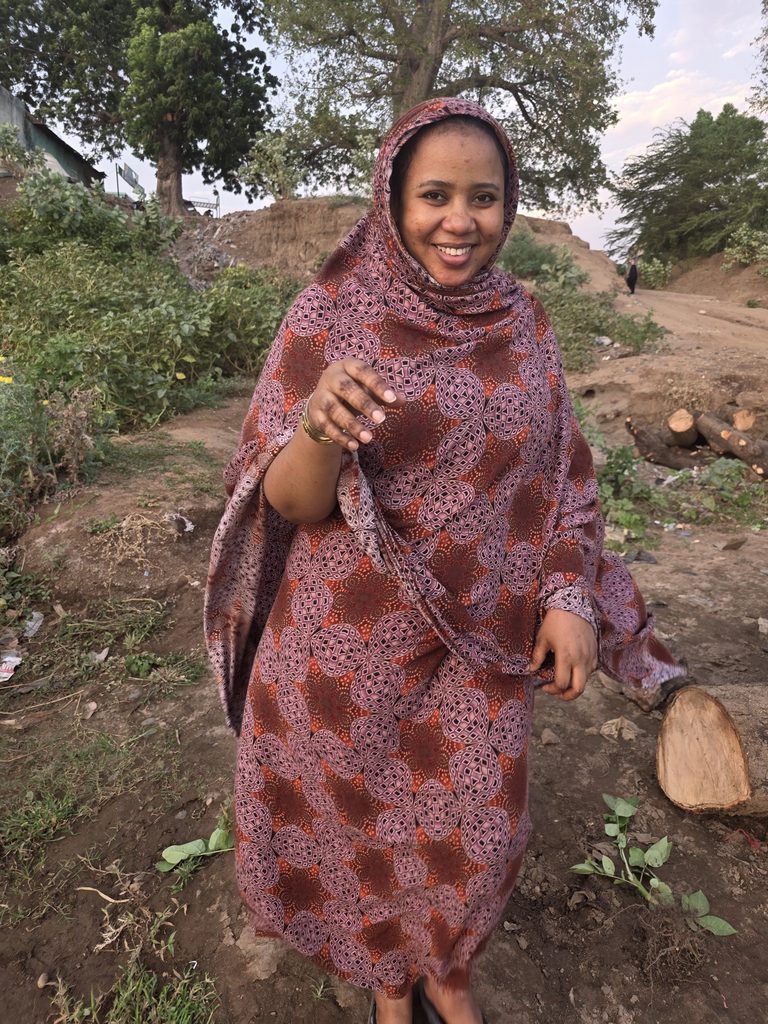
I have never become particularly skilled at the polished way of wrapping a toub myself. Sometimes what is supposed to be instinctive to a Sudanese woman still feels like a small puzzle in my hands. Yet I have never needed to master the technique to feel that it belongs to me.
That matters, because tradition is sometimes presented as though you have to perform it perfectly to claim it. I do not think that is true. Sometimes you inherit the feeling before you inherit the skill.
The toub can be extraordinarily elegant, but it is also useful. A mother can feed her baby beneath it, gathering the cloth around them and creating privacy in the middle of a road, a waiting area or a crowded room. If the weather changes, it becomes a cover. If she needs to move quickly, she can wrap herself and go.
There are everyday toubs, and others saved for weddings, Eid, graduations or important occasions. The toub can be ordinary and ceremonial, conservative and glamorous, practical and extravagant. It can carry social expectations while still giving a woman enormous space to express herself.
Sudanese women have worn the toub into universities, hospitals, offices, markets, government institutions, demonstrations and workplaces. The cloth did not prevent women from entering modern life. It entered modern life with them.
Calling it simply “traditional clothing” therefore feels incomplete. Traditional can sound frozen. The toub has never been frozen. Fabrics change. Prints change. Styling changes. The lives underneath it change enormously.
Yet the form remains recognizable.
This is why fashion deserves to be taken seriously as part of social history. Clothing records expectation, class, aspiration, respectability, beauty and the ways women negotiate being seen.
But in the Sudan I now know through war and displacement, I have watched the toub carry something else too: grief.
In my work, I often sit in rooms with women who have come together carrying experiences that cannot easily be left outside. The toubs may be bright—pink, blue, white, patterned—but sometimes the posture inside them tells another story.
A woman lowers her head. Another pulls the fabric closer around her. Another folds herself inward slightly as she listens.
At those moments, the toub can look almost like a shelter.
I have watched women wrap it around themselves while speaking about things they have lost: homes, safety, people, certainty, the ordinary life that existed before displacement.
There is a posture I have seen enough times that I struggle to forget it: a woman sitting with the cloth drawn around her, shoulders slightly inward, head lowered—not collapsing, not giving up, but almost physically trying to contain herself.
Trying to remain in one piece.
This is why I have become careful with the word resilience. We use it constantly in humanitarian work. Women are resilient. Communities are resilient. And they are. But resilience can sound beautiful from the outside.
Living it often does not.
Sometimes resilience looks tired. Sometimes it is quiet. Sometimes it is simply someone continuing to show up.
Then, slowly, small changes appear. A conversation becomes louder. Someone laughs. Someone who once sat at the edge moves closer to the group. A woman begins arranging another woman’s toub. Someone compliments somebody else’s colour.
Life re-enters the room through very small doors.
Psychosocial recovery is not always announced. Sometimes it appears in posture, eye contact, movement, or in the space a person allows herself to occupy again.
War does not only move bodies. It separates people from streets, neighbourhoods, routines, objects and familiar ways of moving through daily life. When ordinary life is disrupted, ordinary objects begin to carry extraordinary weight.
Food becomes memory. Music becomes geography. Clothing can do the same.
For Sudanese women living away from home, the toub can become one of the objects through which Sudan remains physically present.
That does not mean every Sudanese woman wears one, or that there is one way to be Sudanese. There is not. Sudan contains enormous cultural, regional and generational diversity. Some women love the toub. Some rarely wear it. Some reinvent it.
Culture does not survive because everyone performs it in exactly the same way. It survives because people keep carrying pieces of it forward while allowing themselves to change.
Displacement constantly renames people: refugee, migrant, internally displaced person, beneficiary. These categories may be necessary, but they are very small words compared with the lives they are expected to contain.
Before somebody became displaced, she belonged to a family, a neighbourhood, a profession, a generation, a language and a history. She had favourite colours. She had clothes she saved for occasions. She had a mother whose hand she once held.
People do not protect only physical survival. They protect continuity.
They recreate meals. They repeat celebrations. They make perfume and incense. They decorate their hands with henna. They play songs. They carry photographs, jewellery and clothing.
These things answer a deeply human question: after everything that has happened to me, am I still myself?
For me, the answer is somewhere in this cloth.
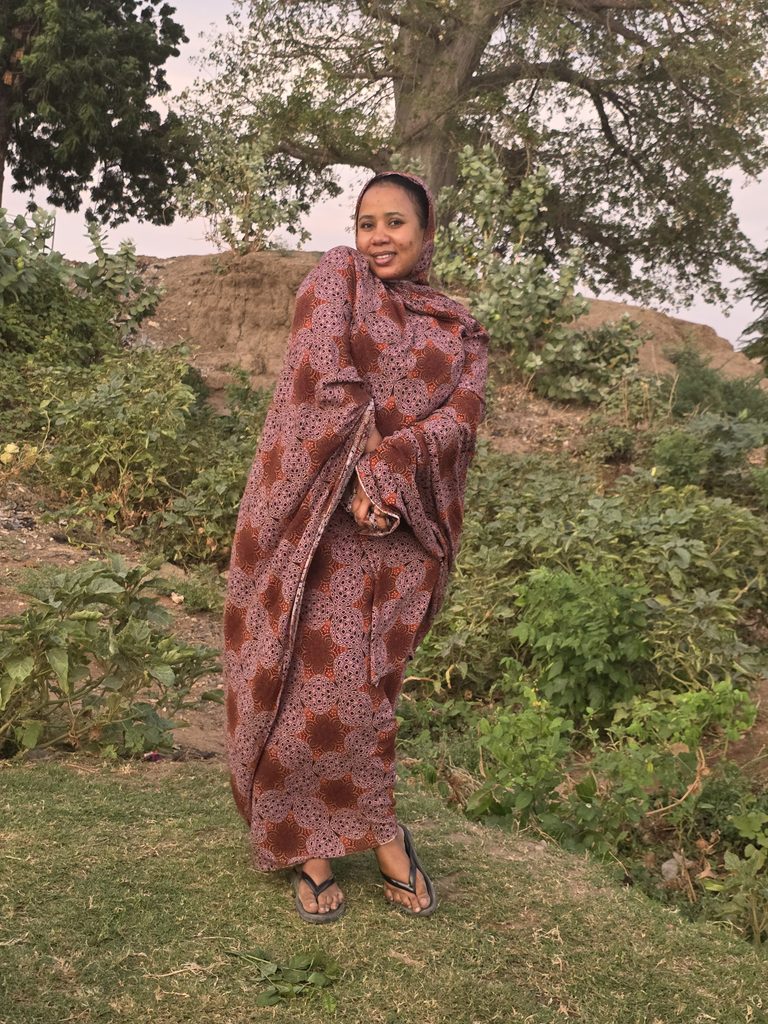
When I think again of my mother’s hand, I understand the memory differently now. Her index finger was holding the toub. My small hand was holding her finger. Neither of us was making a statement about culture. She was simply keeping her cloth from falling. I was simply holding my mother.
But memory has its own way of revealing meaning later.
Today, when the world feels uncertain, I still keep a toub close. I still wrap it imperfectly. I still prefer the easier way my mother does it.
And I still find comfort inside it.
Perhaps because, somewhere in my body, the toub was never only clothing.
It was the first thing I reached through to find safety.
A piece of fabric.
A raised finger.
My mother’s hand.
This piece was submitted by contributing writer Rudaina Sulaiman.