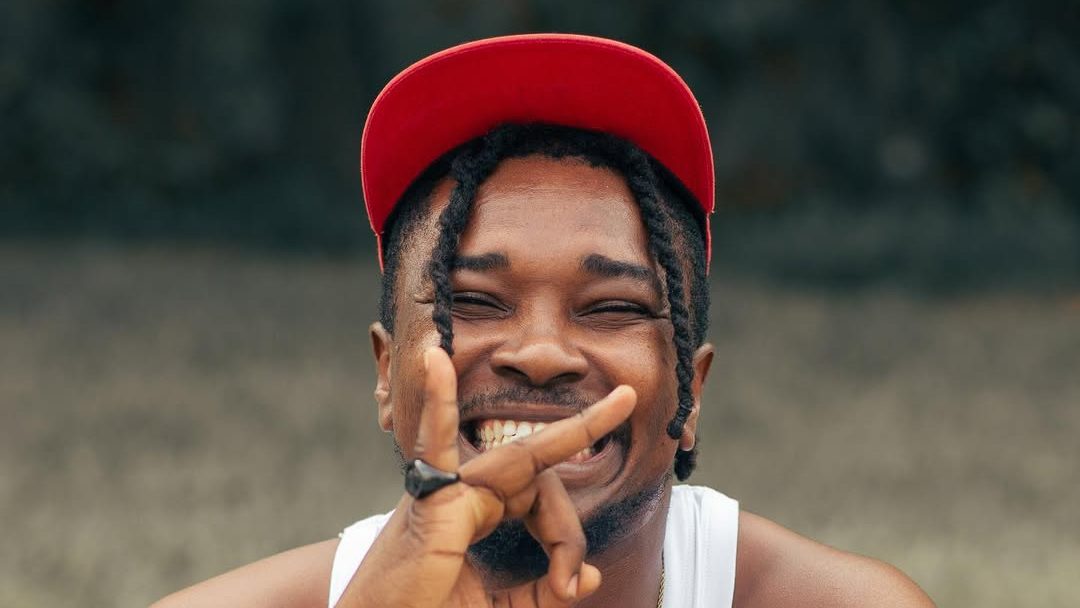
Morse doesn’t talk about his work the way you’d expect. For such an impressive portfolio, there’s no list of credits rattling off, no name-dropping for effect. He’s measured, thoughtful, and almost understated about a career that is quietly touching some of the most significant creative projects coming out of Lagos right now. What makes him rare is the range: in a single year, Morse can move from an intimate artist documentary to a corporate TVC to a live event and make each one feel like it was the only thing he was built to do.
Whether it’s the Rema Homecoming Documentary or running Insert Nights, creating Puma campaigns or unpublished films sitting in a vault waiting for their day in the limelight, Morse has built a reputation the only way he believes it should be built: by being so consistently good behind the scenes that the scenes eventually start speaking for themselves.
This is a conversation about consistently developing your craft, delivering high-quality work and what it means to hold a creative vision together when the notoriously shambolic Lagos is trying to make that impossible.
Who is Morse, and how did you get here?
Morse loves and makes music, but that’s not enough for Morse. So Morse found things to do within and around the music industry that help him express himself creatively apart from the direct creation of music, and that’s what led to Morse working in the corners of the industry that he currently does.
Was there a specific video you watched growing up — a music video, a film, an ad — that made you think “I want to be on the other side of that”?
There was a video I liked growing up, but to be honest, up until about six or seven years ago, I didn’t think I was going to go into videos fully. I liked the Booty Call video a lot. And this is a huge thing for me even now, when videos match the music, when it feels like the video is an extension of the music it was made for and not just some random video with a bunch of effects thrown on it. There wasn’t one specific reason I ended up here. It was more that, as time passed, I sought new ways to creatively express myself, an opportunity came, and I took it.
You carry both a creative and a managerial identity: Head of Production, Producer, Production Manager, sometimes Assistant Director. Which one feels most like home, and which one did you have to grow into?
I grew into all of them, and all of them now feel like home. The good thing about this industry, especially in Nigeria, is that there’s not as much structure. That’s both a positive and a negative, but that lack of structure gives people the chance to explore properly until they find what home is. My path was: production manager, assistant director, and then producer. When I moved to Lagos, my first job was production management, but because I was working full-time for a company, my job felt more or less like producing, even though I knew it as production management. At some point, I got the opportunity to try my hand at being an assistant director. Now I produce a lot more. I’m more involved in the full project. There’s been a clear progression as my career has moved. I’ve basically taken every opportunity I’ve gotten and used it to grow into the roles I’m currently in.
You’ve worked across music videos, documentaries, brand campaigns, editorial content and live events. Is that range intentional, or did it just happen organically?
Intentional. Very intentional. But some things happened organically, even though they were intentional. If we can agree that that’s a possibility, then yes, that is what it is. I always knew I wanted to work across many things. I always knew my skills matched the requirements to do things across all these many outlets. I just needed the opportunity, and that’s where the organic part is. The opportunities came organically, and I was very intentional about approaching them with the right attitude and locking them in.
Insert Nights has run 17 editions since 2023, and now Cafe Riddim is growing alongside it. What does it take to produce a recurring event well?
Consistency. A lot of people can pull off one great night, but consistency is it. What does it take? It takes the ability to battle anxiety every single month. That’s one huge requirement. And maybe a huge ego is one way to put it, but the other way to look at it is an insatiable desire to win. One thing about the scene is that the event scene is more collaborative than people think. I’m friends with a lot of people who do other events. We’re not necessarily competing. A strong Lagos night usually means that if there are four or five events on that night, that’s actually a positive; it means all events that night will most likely thrive, not that everybody’s going to leave one event and go to another. It’s the insatiable desire to win and just a little bit of competitive spirit that has taken me there. But yeah, consistency is key. Just being able to turn up and consistently wow the audience every single month is hard, I can’t lie to you. And the fact that we’ve actually done it amazes me sometimes. We have quite the team, though.
The Bella Shmurda Documentary and the Simi Lost and Found Documentary are very different emotional projects. What does it take to earn the kind of access that makes those stories work?
I don’t think it’s earned. I think it’s given. Generally, with documentaries, especially ones that have to do with the music industry, access has to be given. The artists have to understand the purpose of the project to give you the kind of access that you need. The artist’s team members also have to understand the purpose and the reason behind wanting to document and ask the kind of questions that you’re asking. It needs to be a complete collaboration across all the people involved; the people being interviewed, the artist himself and the artist’s team. On our end, we just have to be ready to convince people and also actually be there to help them tell their story properly. Not everybody is open to it at first. Some people start off being a bit closed off about it, but over time, they become a bit more open.
Your portfolio spans Puma, Providus Bank, Nomba, Marie Claire Nigeria and Spotify Africa. How do you mentally switch between a corporate TVC brief and an intimate artist documentary?
The insatiable desire to win makes it easier to switch between those things because I believe I have a strong idea of what good work across these several categories means. I know what a great TVC looks and feels like (and feel is very important). I know what a really great intimate artist documentary feels like and looks like. The look and the feel are two things I have strong senses for. And then client satisfaction. Whether the client is the director, the artist or the corporation, being able to zone in on that is what makes it easy to mentally switch between projects.
You’ve worked consistently with the same directors across multiple projects: GunTeMi, Mosa Akinjobi, and Director Mani. What does a great director-producer relationship actually look like from your side of it?
Trust and a lot of fights. I like to tell people that my job as a producer puts me in the middle of creativity and reason. A lot of times, directors are very idealistic. They want to achieve certain things, but sometimes the reality just doesn’t match that: the money, the access, the locations, the props. So it’s largely trust. They just have to trust that you are the person who can help them bring their dreams to life. They make most of the magic, to be honest, but the hard part is bringing that magic into real life. There’s a lot of tension, so being able to help them through that tension, to ensure you’re not too far away from their original vision, is everything. Trust in your taste, your work ethic, and your ability to see through problems and find solutions, and your ability to manage expectations on all sides. Trust is the most important thing. From my side of it, I’m dedicating so many hours of my day to making this director happy while also making my client happy. And it can be fun, especially when you trust that the director is really great at his job. If I know the director I’m working with is amazing at what he does and is not going to take any shortcuts, that’s what usually motivates me.
Production management is often invisible work; the reason everything runs smoothly is precisely that nobody notices it happening. Does that ever frustrate you that your work seems invisible, or is there real satisfaction in being the person who holds it all together?
There’s a lot of satisfaction. I think that’s why I find it easy to do my job. I’m very happy being the man behind the scenes because what usually happens — and I’ve found this a lot in my career — is if you’re really good at being the guy behind the scenes, you stop being behind the scenes. Because all the right people within the industry who need to know you will get to know you. And over time, that filters to the larger crowd. I’d like to believe I’ve been successful across a lot of creative activities, and that in itself has now become a reputation that precedes me. If you do your job hard enough and well enough as a producer, you stop being behind the scenes. People just know that it’s you.
Budget conversations in Nigerian production can be brutal. How do you maintain creative quality when the numbers don’t always match the vision?
We start with the best-case scenario, and then we beat it down to match reality. They are brutal, there’s no other way to put it. But because I also want to be creative, I have enough empathy for the director and for the creative side, and I’m also empathetic towards the client and the vendors because I understand where everybody’s coming from. So what I’m chasing at the end of the day is balance. What’s the best I can get for this particular thing without stripping away too much of the creativity or too much of the director’s freedom? Chasing freedom with as much balance as possible, that’s where my mindset usually is.
You have unpublished documentaries for SDC and Victony sitting in the vault. What’s it like finishing something significant and then waiting for it to exist in the world?
Torture. When you work within this industry, you have to be emotionally attached to the project while it’s going on. But once the project is done, you have to strip off that emotional attachment and move on to the next. Staying busy is very important, so you don’t go mad waiting. And also realising that one project is not going to change your life. You post it, you’ll get fanfare for two or three weeks, and your life will continue. It’s not that deep. What makes your career great is relative effort over time compounding. You have to have done multiple projects. There’s not one project that’s going to save you. It’s going to be a collection of multiple projects. Once you do one and you feel satisfied creatively, on to the next. That’s how I beat the anxiety of waiting. And to be honest, if you’re good at what you do in this industry, you find that you’re doing a lot of work consistently. There’s really no time to fully appreciate what you’ve done. You leave the appreciation for the fans and the audience. Yours is to move on to the next and kill it again.
How has the standard of video production in Lagos shifted in the time you’ve been working, and where are the gaps that still need filling?
I give kudos to every single person who is doing it because Lagos tries to kill creativity in every form. Everything is stacked up against you. But we’ve progressed at a speed that the environment doesn’t allow us to; every single day, we are growing and defying the odds. The techniques, the efficiency, the systems are getting better. It might not be at the speed that we want or at a world-class standard yet, but what we are doing with the resources we have within the very strong confines of Nigeria, especially Lagos, is amazing. The number one gap across video productions, events, everything, is locations. Where they exist, they are very hard to access, or the amount of money you’d pay to enter is too high, or the level of permission you need to shoot somewhere is too much. The local strong forces come to take what is theirs, and most people just can’t afford that. It becomes harder to do low-budget productions that have proper impact. We’re constantly finding ways around things, but we need help.
What’s the most chaotic thing that’s ever happened on a shoot or at an event that nobody seeing the final product would ever know about?
Usually, on video work, it’s area boys coming to try to shut things down for shooting in their space. Extras deciding they want to be annoying and wasting time. Equipment or props being delayed by traffic. We live in one of the most chaotic places in the world, so there’s always something. I don’t think I’ve had a stress-free shoot or event ever. Something always happens. And the beauty, what makes my work great, is being able to still achieve greatness with all the chaos around it. That’s why people reach out to me. By the time the final thing comes out, nobody can tell that we went through hell to make it happen.
You’re clearly building toward something. What does the next chapter look like?
I’ve done a lot of participating in the scene. Now the next step is adding to the existing structure within the scene, building a system that can actually support full-scale production across all the outlets I have. Becoming more grounded to the point where it becomes harder for the chaos to affect me. I’m basically gaining more control over the elements. I want to own my own equipment. I want to own my own production house and be able to handle things top to bottom on productions with very little outside influence. That’s the next step for me.