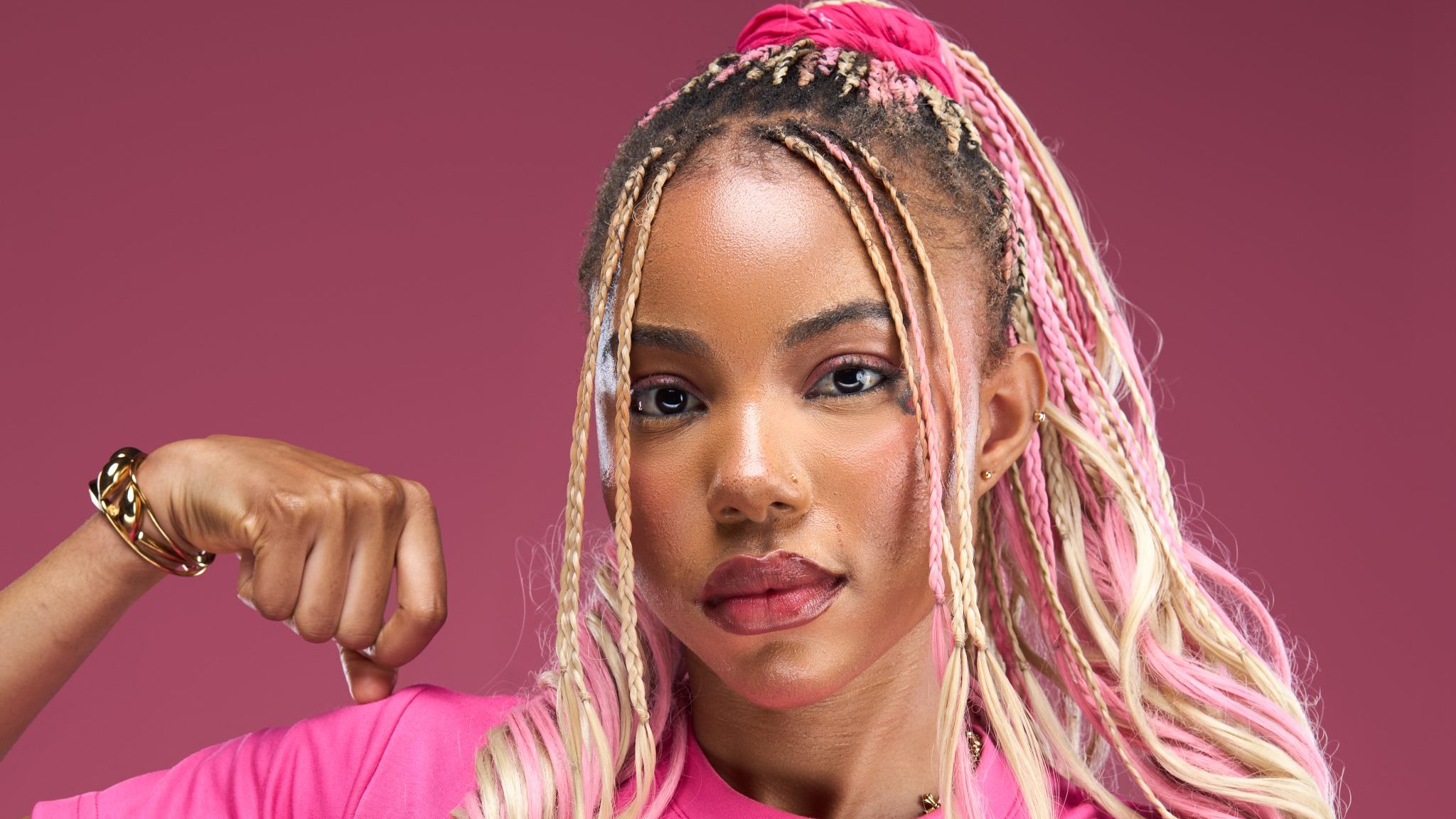
Before TOSOM, there was The Real Jainy, an introduction. Now, with this new EP, the singer says she’s ready to go further: past the confident, polished version of herself and into the parts people usually keep hidden. In this conversation, Jainy talks about growing up as the eldest of four girls, the Friday concerts that planted the seed for a music career, the women who inspired “Girl Power,” and why she thinks every side of a person, not just the presentable ones, deserves acceptance.
For anyone meeting you for the first time, how would you describe yourself outside of music?
I’m the first-born daughter in my family, so I’m a big sister to three beautiful girls. It can definitely be stressful sometimes because being the eldest comes with a lot of responsibility, but I genuinely love it. I get to be someone they can look up to while still being the fun big sister they can come to about anything. So I’d describe myself as a loving, protective older sister who also loves to have fun.
What’s something about you that surprises people once they get to know you?
One thing people are always surprised to find out about me is how much I LOVE food! 😂 Food is genuinely one of my favourite things in the world. I think what shocks people even more is that it doesn’t really show on me. I can eat!
How has your personality changed since you started making music professionally?
I wouldn’t say I’ve completely changed because I’m still very much Jainy. What has changed is my mindset, my work ethic and the way I approach my career. I’m more intentional now. There’s a different level of hunger and discipline because I really want to see how far I can take this. I don’t just dream about succeeding anymore; I understand the work that comes with it.
What does being an “Afrobeats artist” mean to you personally, beyond the genre label?
It’s honestly an honour to be able to carry our culture through music. Seeing Afrobeats receive the global recognition it deserves is beautiful, and being part of this generation of artists taking our sound to the world means a lot to me. Music is one of the most powerful ways we communicate culture, so the fact that I can tell my stories while still carrying a sound that represents home is something I’m really proud of.
When did you first realise music was something you wanted to pursue seriously?
I think I realised quite early. In primary school, we used to have these little Friday concerts for people who loved singing. I remember seeing the anticipation and how happy it made people when I performed, but I also noticed how it made me feel. There was something really satisfying about making people happy through music. Looking back now, I think those little Friday concerts planted the seed.
What’s your earliest memory of music and how did that shape your sound?
My early musical world was a real mixture of pop, highlife and Afrobeats. I grew up listening to artists like Rihanna, Beyoncé, Angélique Kidjo, Tiwa Savage, Becca and Ebony. Those were fun times. I was constantly singing along, lip-syncing and imagining myself performing. I think listening to so many different women with such strong identities helped shape my confidence and made me want to find my own identity as an artist.
How different is the Jainy who released “The Real Jainy” from the Jainy releasing TOSOM today?
I wouldn’t say The Real Jainy and TOSOM are completely different because they’re both still me. I think the biggest difference is growth. The Real Jainy was my introduction. It was me saying, “Hi, this is Jainy.” TOSOM is a more evolved and confident version of that girl. TOSOM also goes deeper emotionally. It explores vulnerability and all the different sides of ourselves that we sometimes hide because we’re afraid of judgement or public opinion. With this project, I wanted to say that you don’t always have to present one perfect version of yourself. All those sides are still you.
Who are the artists (Nigerian or global) that shaped how you approach songwriting?
There are so many artists I take inspiration from; Rihanna, Beyoncé, Tiwa Savage, Wizkid and Ayra Starr are definitely some of the main ones. What inspires me isn’t necessarily about wanting to sound like them. I look at their confidence, individuality, performances, longevity and how they’ve created their own worlds as artists. That inspires me to keep developing what the Jainy world looks and sounds like.
“Girl Power” carries a strong message about women in decision-making. What real-life experiences fed into that song, if any?
Girl Power was inspired by the women around me. Women like my late grandmother, my mum, my boss, and so many other women I’ve watched both personally and from afar. I see women balancing so much: careers, families, relationships, responsibilities, dreams, while still dealing with their own trials and challenges. And somehow, they keep going. That’s the energy behind Girl Power. It’s about recognising that strength and celebrating women taking up space and owning who they are. I’m still growing myself, so I also see Girl Power as something bigger than just a song. There are a lot of things I would eventually love to do around that message and use my platform to uplift other girls and women.
Walk us through how a Jainy song usually starts. Is it a melody, a lyric, or a feeling first?
It really depends on the mood. Sometimes a melody comes first, sometimes it’s a lyric, and other times it’s just a feeling I’m trying to express. I don’t like forcing it into one particular formula. I just follow whatever comes naturally in that moment and build from there.
TOSOM explores different sides of you, so how did you decide which “sides” made the final tracklist?
The songs that made the TOSOM tracklist represent different emotional sides of us: confidence, vulnerability, love, hurt and everything in between. Sometimes people feel like certain emotions need to be hidden. You can show confidence, but maybe not insecurity. You can show love, but you don’t necessarily want people to see the hurt. I don’t think it should be like that. We should be allowed to experience and express every side of ourselves. That’s really what TOSOM means to me; accepting that there are many sides to who we are, and none of them makes us less worthy of being accepted.
What was the collaboration process like working with producers Ceevibes, Mikaba, and Zyrx across the EP?
It was honestly an amazing process. The environment was fun, relatable and comfortable, which made creating so much easier. I was working with really talented creatives, but there was also space for me to experiment, speak up and just be myself. I think you can hear that freedom in the project.
Was there a track on TOSOM that was the hardest to write, and why?
Not really. The inspiration for each track came at the right time and from the right feeling, so nothing felt extremely difficult to create. Of course, there were lyrics that got changed or completely scrapped along the way, but that’s just part of making music. Sometimes you think you’ve written the perfect line and then you hear it again and go, “Yeah…no.” 😂 That’s all part of the process.
How involved are you in the mixing and mastering process, or do you trust that fully to your team?
Definitely. My boss especially has been very intentional about surrounding me with people who understand the vision and can bring the best out of the music. Working with engineers like Milla Mix has also been great because mixing can completely change how a record feels. Having people around who understand the sound we’re trying to create makes a huge difference.
If you had to sum up TOSOM in three words, what would they be?
Confidence, love and faith. Confidence to believe in yourself, love in all its different forms, and faith to keep going even when you can’t see exactly where everything is leading.
Is there a song by another artist that you wish was your own?
Yes, yes, YES! People by Libianca. When I first really listened to that song, I was jealous in the best way because I was like, “Why didn’t I think of writing this?” She managed to take something so real and relatable about life and turn it into such a beautiful record. Those are the songs I love, when you hear them and immediately feel like the artist has put something into words that so many people have experienced but couldn’t explain.
What does your ideal weekend actually look like?
My ideal weekend right now would probably sound like work to everybody else. 😂 Performances, appearances, creating content, maybe some studio time, just being outside and doing things connected to the music. But I’d definitely need some good food somewhere in between. That part is non-negotiable!
Where do you see yourself and your career five years from now? Beyond music, is there a bigger mission or legacy you’re hoping to build?
In five years, I still see myself doing what I love: making music. Of course, I want bigger stages and bigger audiences, but numbers aren’t the only thing that matters to me. Even if ten people are standing in front of me and those ten people can genuinely say that my music helped them, made them happy, gave them confidence or got them through something, that means something to me. I want people to sing my music, dance to it and heal through it. I’d also love to be in a position where I can create opportunities for younger people who want to enter the entertainment industry. I know how much talent is out there and sometimes people just need someone to open a door for them. So five years from now, I want Jainy to be bigger than just me. I want what I’m building to create space for other people too.