Afrobeats may be Nigeria’s greatest musical export, but beneath its global ascent, another cultural movement has quietly been gathering momentum. Across the country, a renewed appetite for music that carries the cadences of indigenous speech, the poetry of ethnic proverbs, the pulse of talking drums and the memory of stories passed from one generation to another.
Long before Afrobeats became the soundtrack of a global youth culture, artists like Alhaji Barrister Sikiru Ayinde, King Sunny Ade, Ebenezer Obey and Haruna Ishola had been documenting the anxieties, celebrations, spiritualities and everyday lives of their people through Juju, Apala and Fuji.
Their music was more than simple entertainment. It was an archive of a people, a living record of native language, belief, aspiration and memory. Today, as a new generation of Nigerians look backwards for sounds that can tell them something about who they are, beyond the speed of the algorithm and the demands of a global music industry that increasingly asks African artists to be malleable to Western gaze, there is a desire for the local again: for indigenous languages, traditional instruments, folklore, spirituality and stories that do not need to be translated before they can be understood.
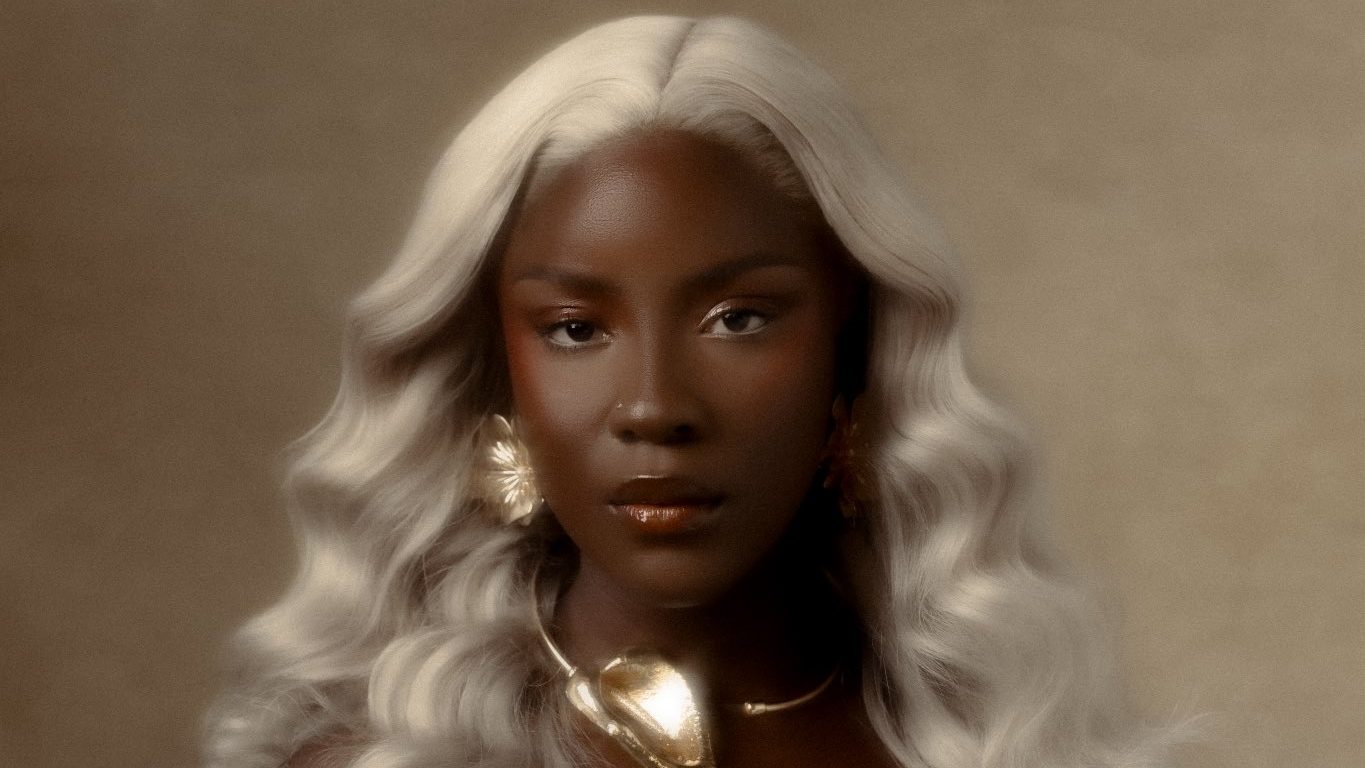
It is within this cultural reawakening that Teledalase’s music feels particularly resonant. Born in Osogbo and shaped by a life between Nigeria and the diaspora, she approaches Yorùbá culture not as an aesthetic to borrow from, but as a language through which she understands herself and the world around her. Her music moves between folk, soul, alternative sounds and traditional Yorùbá expression, allowing ancestral memory and contemporary feeling to exist in the same space. On songs like ‘Eledumare’ and her recent ‘SANGO, IGI NLA,’ she reaches into Yorùbá mythology, spirituality, language and oral tradition, not to reproduce them exactly as they were, but to let them breathe in the present.
Her songs feel like prayers: potent supplications, spoken entirely in Yorùbá, the kind of manifestation music you return to when you need to be reminded of your own strength and ancestral magic within you. Where that comes from is no mystery once she starts talking. Teledalase grew up in a household where art was expressed as easily as breathing. Her father was a visual artist. Her mother, a dancer, toured Europe and the United States teaching traditional Yoruba dances and curating stage plays. Her grandfather, Chief Muraina Oyelami, was a founding member of the Mbari Mbayo Osogbo artist movement. Mornings meant waking up to her mother’s dance troupe rehearsing, drums and voices already in the room.
Today she writes from the diaspora, and her latest single, ‘SANGO, IGI NLA,’ carries all of those influences. It is a song about justice and equality, but also about persistence. “The fact that you’re still here breathing makes you an activist,” she says. For Teledalase, being Nigerian is already protest enough: the market women funding their children’s university fees, the secondary school kids who dream of becoming astronauts with no astronaut in the family. “To be a Nigerian or to be a black person is to dream without limits.”
At a moment when young Nigerians are increasingly searching for music that speaks not only to where they are in the world, but to where they come from, Teledalase is making a case for Yorùbá folk music as a living, evolving language and positioning herself at the centre of its next chapter.
You grew up in Osun State, the cradle of Yorùbáland, and your music is deeply rooted in Yoruba culture. Who were your influences growing up, and how did they shape your artistic expression, especially in a country that, while indigenous, still leans largely Western?
I wouldn’t say it was Osun State that necessarily influenced me. I would credit my parents and my extended family. My dad, who has passed, was a visual artist, and my mum is also an artist and a dancer. My paternal grandfather, Chief Muraina Oyelami, was one of the founding members of the Mbari Mbayo Osogbo artist movement. So I was born into a family that was truly all about the culture.
My mum is the Yeye Asa of Iragbiji Land. She used to tour parts of Europe and the United States, teaching traditional Yorùbá dances and curating stage plays. She also had a dance troupe called Omitun, and we would wake up early in the morning just to watch them practise, playing the drums and singing. So I was exposed to life being interpreted and digested as a Yorùbá person, and to music being that way.
Everything else was introduced as I grew up because my parents had a very diverse palate. My siblings and I were exposed to all sorts of music, but at the foundation of it all was everything I’m about.
We know your music is rooted in culture and folk textures, and that you sing in Yoruba. What does Yoruba allow you to say that English cannot?
That’s a good question, and you won’t be the first person to ask. When I started releasing my singles, people asked me to put them in translation, and I thought, I don’t think I can necessarily translate that into English. Western languages can be very rigid and restrictive. Take love songs in English, for example. Honestly, shout out to the poets, because they help expand how malleable the language can be, but there are only so many words for the depth of feeling and emotions that the English language can express.
There are themes of life I cannot put into English because I did not experience them from that perspective, or because they were not explained to me in English as a child. The proverbs I learned early on are now part of my school of thought. If I have to write something in English, I write it in Yorùbá first and then translate it to English.
It’s interesting when Nigerians ask me why I write in Yorùbá, and I’m like, because I am a Yorùbá person. I don’t want to generalise, but it’s like asking a Korean person why they sing in Hangul. It’s my language. To me, it’s as natural as breathing. It is my tongue. It’s in my blood. There’s no other way.
I am open to this new wave of Afropop, with more people using the language. I think that’s just the beginning, but it’s not new, and that’s something we need to highlight as we champion this social media wave. King Sunny Ade has done it. The late Barrister did it. Ebenezer Obey did it. Lagbaja did it. Many people who came before us have been doing it, and we are simply the continuation of it all.
What do you think is driving this return to ourselves within our generation, and where does folk and Afrocentric music sit inside Nigeria’s increasingly global music conversation?
I’m not a big fan of globalisation because, in the long run, it dilutes the potency of the music, and the preservation of it too. I’m also wary of social media trends because they isolate music into a trend. I’ve seen the same thing in fashion. We get caught up in what I call fast music and the proliferation of it all.
So it’s very reassuring and exciting that we have a reawakening, and that people are drawn towards it. My hope is that it’s not just a trend, and that 40 years from now, when nobody is paying attention online, we still love it. I’ll ask you this: would you go to Osun State and actually listen to people creating undiluted Yorùbá music? There’s a wonderful artist called Adunola who is very knowledgeable about the Orishas. I don’t think we give her the same platforms we give people who package it as alternative, Afropop or Yoruba pop. But what about the people who are the historians, who are actually living this life and presenting Yorùbá undiluted? I have mixed feelings. It’s good, but I’m wary.
I hope it encourages people to read more Yorùbá books, to ask more questions and look into their heritage, and not to treat the language as cool all of a sudden. I remember when Asake blew up, even the international media were asking why he was singing only in Yorùbá, and why it still had that Fuji connotation. Now we have an American artist like SZA shining a spotlight on it, and new waves of African female artists presenting Yorùbá in different contexts. I hope we continue in that direction. I hope it takes us to a deeper level of Yorùbá ni isese.
It has always been cool to be Yorùbá. It has always been cool to sing in Yorùbá, to speak your language, to wear gele, aso oke and fila, to dance bata and use traditional drums. I hope we continue to shine a spotlight on the people who were doing it even before it was cool, even before it was a trend.
Folk music has always been the music of ordinary people: their joys, grief, labour, spiritual lives and contradictions. In your music, the personal is often communal and intimate. What can Nigerian folk music tell us about ourselves that Afrobeats or commercial pop sometimes cannot?
Humans are very complex, and what folk music gives the audience is a way to process life. We need music to dance to, and music to relax to. But we also need music that documents the times we’re living in, that speaks on events happening right now and events that have existed. It’s a way of preserving our identity.
I’m a big fan of lots of Afrobeats artists. At some point, I was a die-hard Wizkid fan in secondary school, and I liked the way he sang about women. But as an adult, my palate has changed, and that’s why it’s important to have a variety of genres. I hope they don’t continue to box all of us into Afro this or Afro that, because every artist who has something to say should be able to say it. We shouldn’t all have to dance all the time.
Take my song, Taste of Life. It’s very dark and very heavy. I hope you listen to it once or twice and you’re done, but commercial music isn’t designed that way. It’s designed so you come back to it over and over and play it in the club for your friends. I don’t think anyone wants to play a song about the dark sides of womanhood and feminism in the club because it’s not commercial music. It is a different type of documentary, and that’s what folk musicians do. We document, we digest, we process, and we are just as important as commercial artists.
Your recent single, SANGO, IGI NLA, centres on justice and equality. What is the place of African music in politics and as a tool of revolution for the masses?
Let’s establish this: the fact that Nigerians and black people are still here is political. That in itself is revolution. The fact that I, as a Nigerian in the diaspora, can write a song like that is an act of protest. No matter where you put us, we make something out of nothing, and we know how to refine the factors designed to limit us so that they elevate us. So it’s not about trying to be revolutionary. It is simply to be Nigerian.
I grew up seeing it. You see it in the market women selling goods to sponsor their children in university. You see it in women joining cooperatives and taking loans. You see it in children who have never been exposed to what an astronaut is, whose parents are not astronauts, but who tell you in secondary school they want to be a physicist, a mathematician or a doctor. Not because there’s a doctor in the family, but because to be a Nigerian or to be a black person is to dream without limits and to believe you can be that. That is revolutionary, and that is also an act of protest, especially in a country not necessarily designed to nurture you, where the system does not care whether you make it home or not.
SANGO, IGI NLA is a song that has been brewing inside me for a while, as a Nigerian and as a black person living in the United States. It is not an accident that I would write a song about being unshakable and relentless. What makes all Africans and all black people special is that spirit of the Igi Nla. The thunder will strike and the lightning will come, and history has shown us over and over that the storms will come. But we are still deeply rooted. We go nowhere. Our branches may break, but we will rise again.
That is the whole premise of the song. It is a testament, and it’s not new, but it is a way to remind each of us that your existence alone, the fact that you’re still here breathing, makes you an activist. Now go and use your power and own it, because we are not powerless in this system.
You mentioned your father’s passing, and my condolences. What did grief uncover in you that music had perhaps been waiting for you to say?
In all honesty, before my dad passed, I had already started to grieve him. A few years ago, I made an EP titled The Blue Child, based on the dynamics of the relationship I had with my father. So when he passed away, it was very difficult. I don’t think I wrote for months. I stayed away from my studio.
Even now, I know that my dad has passed away and I know it hurts, but I don’t think my brain is ready to put that into music. Subconsciously, I’m still processing. The Blue Child was the project I made when my dad was still alive, and now I can’t even make another one (yet ) now that he’s no longer here. I don’t know where to put that sadness or what to do with that sorrow. I would describe it as not having put pencil or charcoal to the canvas yet. I know it’s there, but it’s too blurry for me to put into words or music.
‘SANGO, IGI NLA,’ opens up ideas of roots, endurance, generations, belonging and justice. What does the tree represent to you, particularly as a Yoruba woman making contemporary music?
I actually made an animation for it. To me, Igi Nla is a woman. I don’t know how factual that is, because I haven’t asked the custodians that I’m supposed to ask, but in my mind Igi Nla is female. She represents the spirit inside each of us that never disappears, even in the darkest times.
If you look at the state of the world right now and pay too much attention, it can drown you. I think things will get worse before they get better, so I hope we can all hold on to that power inside us. Whatever grounds you and keeps you deeply rooted, that’s your Igi Nla. For some people it’s religion, for some it’s family, their parents, music, friendship or their job. My mum is one of mine, because trees network. They communicate.
Everyone should take some time to look inside themselves and around them. Don’t ruminate on it too much, but be self-aware. Know what grounds you and hold on to it, because trust me, you’re going to need it on this journey through life.
Not many Nigerians are familiar with you and your sound yet, so this may feel like an introduction. What do you wish people understood about the woman and the artist behind the music?
My name. Teledalase. My name is an affirmation. It’s a consolation that will always prevail. It also carries power and authority that I’m not here by accident. I am not lost. I am not confused. I am intentional. I know what I want to write about and what I want to put into the world, and I can assure you that if I put out 100 songs, at least one of them will be for you.
That’s what I want people to know: my name is my name, my music comes from my name, and I am not here by accident.