We inherit things we do not immediately recognise as our own; the cadence of a mother’s voice, a song remembered long after its meaning has faded, the particular ways we love, grieve, pray, and make sense of the world. Sometimes, it takes returning to where we come from to understand that these things have always been speaking through us.
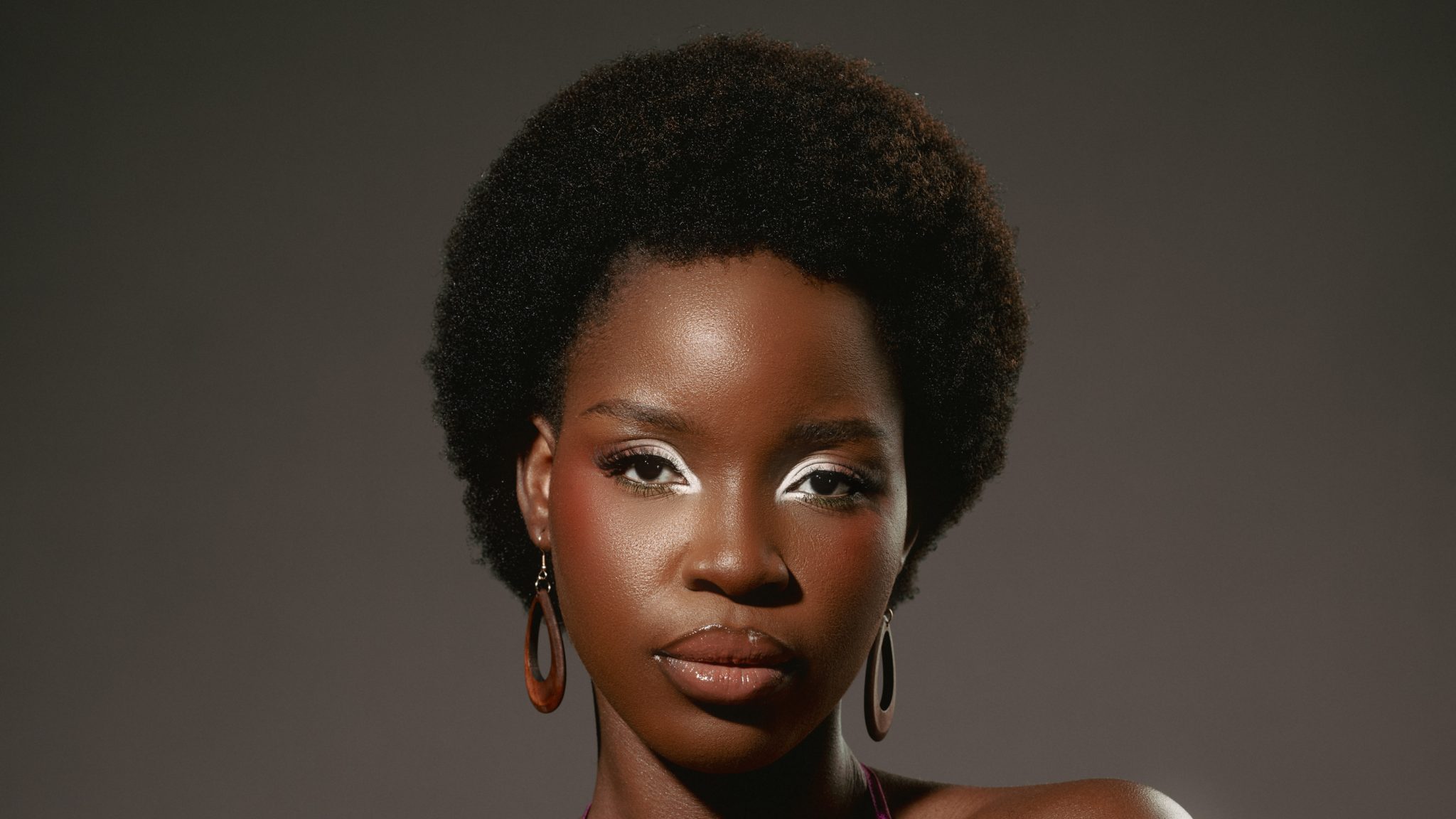
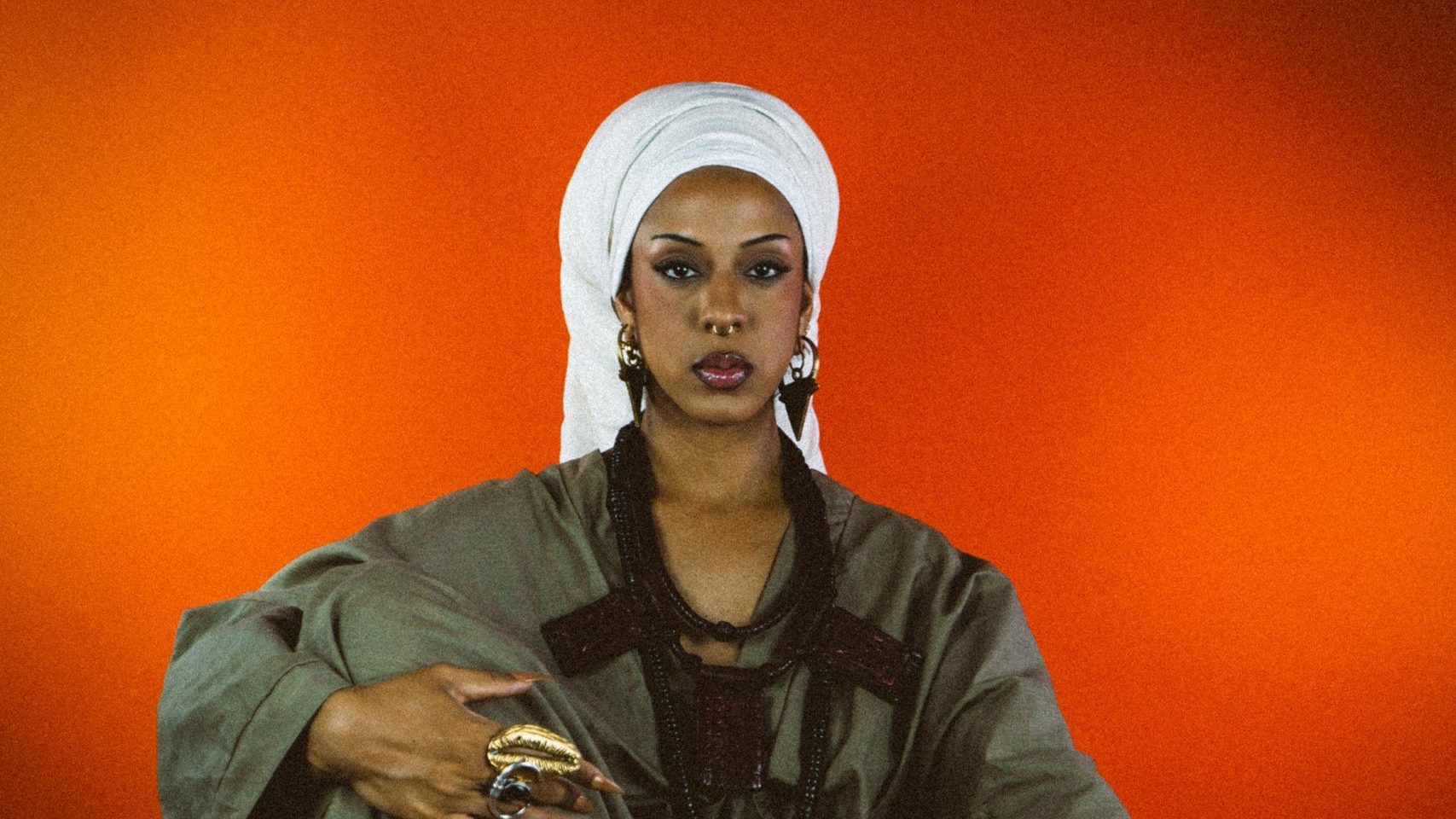
For French-Ivorian singer-songwriter wordsofAzia, music has become a way of listening to that inheritance. Born in France to a Bété mother from Côte d’Ivoire, she occupies a space between geographies, languages, and cultural experiences, negotiating what it means to belong to a place while being shaped by another. Yet rather than letting this distance become a fracture, she is finding ways to make music from the meeting point. Her work draws from Bété chants and ancestral traditions, weaving them into a sound that carries traces of folk, soul, and jazz. The result is music that feels at once deeply personal and older than the self.
On Okè, her mother’s voice moves alongside her own, creating an intimate exchange between generations. It is a meeting shaped by what survives migration, the histories women carry in their bodies, and the ways cultural memory finds refuge in song. For wordsofAzia, this process has also meant discovering her mother anew: not only as the woman who raised her, but as a daughter of a culture, a woman with her own wounds, and a keeper of traditions she has continued to sing across continents.
In our conversation, we explore the complicated tenderness of belonging, the process of reclaiming a voice once viewed with discomfort, and the spiritual histories that lie beyond the music itself. We spoke about the vulnerability of songwriting, the quiet revelations that emerge when we create without knowing what we are trying to say, and the responsibility of carrying ancestral knowledge into the future. At the heart of it all is a question of what it means to find oneself in the things that came before.
Okè opens with traditional Bété chants from Côte d’Ivoire, establishing a conversation that feels older than the song itself. It bridges contemporary music with a voice rooted in ancestral tradition. What did you want that opening to awaken in the listener? And what does it mean for you to begin a song by listening to a voice that existed long before your own?
It feels like the root of everything, the origin. The creative process can begin in different ways, but sometimes it starts with the chants and what they evoke in me. That was what happened with Okè. It began with the chant.
It’s traditional Bété, although I tweaked the harmonies a little and added some words and chords differently.
There’s also something therapeutic about the chants. As much as I love singing and playing the guitar, I also love listening. I find the chants quite soothing.
Okè explores the relationship between mother and child. What have you come to recognise in yourself that you now understand as an inheritance from your mother? And how did that realisation shape the song?
My voice, actually. It started with that. My mum was singing even before I was in her belly, and she comes from a lineage of women who sang as well: her mother, my aunts, and my grandmother’s sister. It’s something that’s in my DNA.
Growing up in the West, even with an African background, I wasn’t always proud of my voice.
Then, one day, I came across a video of my mum and grandmother singing together. My voice has quite a low range, even though I can sing high, and watching that video completely changed how I saw it. I realised that this voice I had been uncomfortable with was something I’d inherited from my mother and grandmother.
It shifted my entire perspective.
There are so many things I can recognise in myself that I’ve inherited from my mother, her mother, my father, and my family. A lot of it isn’t even conscious. But the biggest thing is music, because it came to me in a way that felt inevitable. I couldn’t imagine doing anything else.
Music is how I express myself, my love for God, and my creativity. It’s also how I connect with people, especially when I’m struggling in other areas of my life. Music is how I communicate, and I know it existed before me.
Born in France to a Bété mother from Côte d’Ivoire, you occupy a space where different geographies and cultural experiences meet. Have you ever experienced that sense of displacement? How has your relationship with your Ivorian heritage evolved, and what has it taken to move from inheriting this identity to developing an intimate relationship with it?
That’s a very interesting question because I grew up feeling like I was never in the right place. I always felt like I wasn’t behaving the right way or loving things the right way. The way I experienced and expressed myself made me feel like I didn’t belong, and I spent a long time trying to fit in.
Eventually, I realised that my background was part of who I am, and that there are places where I would feel more comfortable. Places where I could be proud of how I love, how I express myself, how I move, how I talk, and what makes me laugh.
I think that’s what happened when I moved to Abidjan. I began to recognise how many aspects of me actually came from that place.
I grew up with a very large family on my mother’s side and a much smaller one on my father’s side. On my father’s side, I was surrounded by maybe four or five people, but on my mother’s side, there were about 40 or 50 of us. I grew up surrounded by my aunts, my mother, and my cousins. So, even though I was living in Paris, I was raised within Ivorian culture.
When I decided to move to Abidjan, I felt as though I’d found myself and found my place.
Still, I know I’m different because I grew up in the West and because I’m mixed-race. I have different cultural backgrounds, and even my skin colour can influence how people perceive me. Sometimes it’s hard to blend in without being noticed or questioned.
But after spending a lot of time in Côte d’Ivoire, I found a different way to connect with my roots. At some point, people begin to see you beyond those differences, and you can exist.
It’s a balance to find, and I think it’s different for everyone. People with different cultural backgrounds relate to different parts of themselves in different ways, depending on how they were raised and what they’ve experienced. We’re all trying to navigate those things and find ourselves within them. I feel I’ve managed to do that in some ways, especially through music.
How has that process of connecting with your Ivorian heritage shaped your understanding of yourself as an artist? And how does that connection translate into your artistic expression?
I wanted to make music that felt and looked like me. The space my ancestry and Bété culture occupy in my life is the space I’m going to give them in my music.
The way I interpret those influences, the way I sing, and the way I produce my music also reflect my background as someone who was raised primarily in France, in the West.
When I first started making music, I wasn’t necessarily trying to tap into my African side. I also didn’t want to make Afrobeats or the kind of rhythmic, entertainment-driven music people often associate with African music. I love that music, but it isn’t my identity.
In Paris, for example, labels and people in the industry tend to have certain expectations about the kind of music you should make. That’s what they’ll look for, even though what I’m doing is much more niche.
My music is more ancestral and traditional, and when I was living in Paris, I didn’t feel there was much room for that. It didn’t feel like a real possibility.
That’s one reason I went to Abidjan. It let me build a bridge between different parts of myself and create music that sounds traditional and deeply rooted, while still carrying influences from soul, jazz, and folk.
You’re building a body of work centred on cultural memory, identity, spirituality, and a return to African ancestry. As you look towards the next chapter of your artistic life, what are you hoping to understand more deeply about yourself and your heritage? Are there stories, sounds, or aspects of Bété culture that you feel you’re only just beginning to discover?
There are so many things I’m discovering every day through the work I’m doing, because it’s about much more than making music. Right now, I’ve become particularly interested in the spiritual aspects of my culture. I’ve explored the music and the language, but now I’m interested in what existed spiritually before. How did our ancestors pray? How did they bless the soil and protect one another?
So many traditions still exist in some form, sometimes merged with religious practices, and I’m very interested in understanding them. I’m also interested in history: the stories of people who were important to our traditions and culture, whose lives and experiences have been passed down through songs, chants, and tales.
I’m trying to go deeper into all of that.
I think the first level of discovery was the language and the musicality. Now, I’m trying to understand the meaning behind the music and the history it carries.
As artists and creatives, we struggle to articulate some things in our everyday lives. Sometimes, our art becomes the language for emotions that are too painful, complicated, or unfamiliar to explain. What have you been able to communicate through your music that you’ve struggled to express in your personal life? And has songwriting ever brought you closer to an understanding of yourself that you weren’t consciously searching for?
Definitely, it’s happened many times.
Sometimes, I experience emotions I can’t quite identify or explain. I’ll pick up my guitar, and the words will naturally begin to flow. Then I’ll listen to what I’ve written and think, Oh, so that’s how I feel.
For example, when I wrote Oyè wossô, I was spending a lot of time with someone who seemed to carry a dark aura or energy around them. They were self-sabotaging, but I wasn’t fully aware of how I felt about the situation or how it was affecting me.
When I started writing, all I could hear in my mind was this idea: There’s a light coming from your chest.
It became a reflection on duality, on day and night, darkness and light, and the knowledge that light will return at some point.
Through writing the song, I realised what I was feeling. That happens a lot. Sometimes, I’m unable to express an emotion or even recognise that I’m experiencing it until I start writing and playing the guitar. There’s less control over the process, so things come out naturally. Then I listen and realise, Oh, that’s how I was feeling.
Music also makes me more comfortable sharing my emotions and being vulnerable. Vulnerability isn’t always easy, but when I make music, I allow myself to be vulnerable. That’s what I express.
I think that’s one of the beautiful things about art. It can be cathartic, a kind of release. When you’re creating, the rest of the world seems to fall away, and you’re simply pouring your soul and energy into what you’re making.
Okè feels like a bridge between two generations. Your mother’s voice sits alongside yours, creating what feels like a call and response between the two of you. What have you learned about your mother’s relationship with her heritage as you’ve grown older? Has understanding her as a woman with a history beyond motherhood changed the way you understand what she’s passed on to you?
I don’t even know how to answer that because I’ve learned so many things. It’s almost as though I’ve met her for the first time. Through making music with my mum, I’ve discovered a whole other side of her.
I discovered a woman wounded by moving to another country and seeing that her children weren’t connected to their culture in the same way she had been connected to hers through her own mother. I saw her healing through this process, and I realised I was healing too.
I also discovered that she had maintained her relationship with her heritage through music. Singing those chants has always kept her grounded.
My mum moved to France when she was around 16 or 17. She was so young, and she was the first person in her family to make that move. Before leaving, she had sung those chants in her village. When she arrived in France, she continued singing them, but now she was singing them by herself, away from the place where they had originated.
There’s something particularly meaningful about the fact that I’m now making this music with her and singing those chants alongside her.
By taking the time to explore her history, I discovered a part of her I hadn’t known before. I began to understand her relationship with her identity and her beauty as a Bété woman in a different way.
With Okè, you’re singing about a form of love and knowledge that moves between generations. When someone encounters your music years from now, perhaps someone from a generation that hasn’t yet been born, what would you want them to understand about the world you come from, the heritage you carry, and the person you’re becoming?
I’d like them to feel grounded. I don’t necessarily know what I’d want them to learn from me, but I’d like them to feel seen, too. I want them to feel that there’s something in my music that looks like them, something they can relate to.
I want them to feel understood when they listen to the music, even years from now.
I hope it inspires people to be kind to themselves and to explore the world, their family histories, and their ancestry with love, curiosity, and patience.