Long before Afrobeats became Nigeria’s biggest musical export, electric guitars, fuzz pedals and psychedelic grooves were already moving the country people on the dance floors.
When people talk about Nigerian music history, the conversation usually moves through highlife, juju, Afrobeat and, eventually, Afrobeats. Rock rarely gets the same attention. But in the late 1960s and especially throughout the 1970s, Nigeria had a thriving rock scene of its own. It wasn’t simply a case of Nigerian musicians copying the Beatles, Jimi Hendrix or Led Zeppelin. Local musicians took the sounds coming from Britain and America and folded them into highlife, soul, funk, African percussion and the musical traditions they already knew. The result was a strange, vibrant hybrid often described as Afro-rock, psychedelic rock or Afro-funk.
The Hykkers were among the most important early groups. Formed in the 1960s, they became one of Nigeria’s first professional pop and rock groups, initially playing the jangly, harmony-heavy style associated with early British beat music. The Nigerian Civil War would dramatically disrupt that trajectory. When the group emerged from the war, its sound had become considerably heavier and more psychedelic.
The war itself is an important part of this story. Musicians were not operating in a vacuum: bands were displaced, separated and sometimes recruited to perform for soldiers. After the war ended in 1970, Nigeria entered a period of reconstruction, and music was part of that rebuilding.
The result was an explosion of genres.
The early-to-mid 1970s, the golden age of Nigerian rock music, produced an extraordinary number of bands.
There was The Hygrades, led by guitarist Goddy Oku, whose experimentation with guitars, amplifiers and effects helped give Nigerian rock some of its distinctive fuzz-heavy sound. Their “In the Jungle” remains one of the defining recordings of the era.
There was The Funkees, whose music blurred the boundaries between rock, funk and soul. There was Ofo & The Black Company, a theatrical and eccentric group whose music drew on rock while embracing distinctly African ideas and imagery.
And then there was Ofege. Formed by teenagers at St Gregory’s College in Lagos, Ofege recorded their debut album, Try And Love, while its members were still in their teens. Released in 1973, the record combined fuzzed-out guitar, sweet harmonies and psychedelic rock with the rhythms of the Nigerian scene. Their youth makes the record even more remarkable. Songs like “Try and Love” and “It’s Not Easy” don’t bring to mind hesitant newbies, but a confident young band comfortable in its own voice.
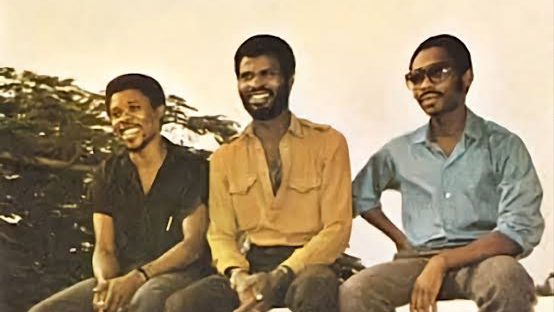
If there is one Nigerian band that belongs in any conversation about African psychedelic rock, it is BLO. The trio, Berkley Jones, Laolu Akintobi and Mike Odumosu, emerged in Lagos in the early 1970s after years of playing together in different formations. Their 1973 album Chapter One is widely regarded as a landmark of Nigerian psychedelic rock. Their music brought together heavy guitar, funk, psychedelic textures and African rhythms. “Chant to Mother Earth”, in particular, captures the strange beauty of the Nigerian psych-rock sound – spiritual, fuzzy, rhythmic and unmistakably of its time. BLO would continue recording through the 1970s and into the early 1980s, but the band’s early work remains its most influential.
One of the most interesting things about Nigerian rock is how porous the genre was. MonoMono, formed in Lagos in 1971 and led by Joni Haastrup, mixed soul, funk, African rhythms and British rock. Their music could move from a heavy groove into something closer to Afrobeat without ever feeling out of sync. Their instrumental, “Kenimania”, is a perfect example.
The Lijadu Sisters also belong in this wider conversation. Although calling them simply a “rock act” would be reductive, their music incorporated psychedelic rock, funk, soul and African rhythms. Their presence is a reminder that Nigerian rock wasn’t exclusively a boys-with-guitars phenomenon.
That genre-blurring was one of the scene’s greatest strengths.
For every Ofege or BLO that survived into the international record-collector canon, there were dozens of groups whose recordings became difficult to find.
The ‘Wake Up You!’ project, compiled by Nigerian musicologist Uchenna Ikonne, helped bring many of those recordings back into circulation. Its two volumes document a remarkable collection of Nigerian rock and psychedelic-funk acts active around 1972–1977, including The Funkees, Waves, Tirogo, Question Mark, The Apostles, War-Head Constriction, The Founders 15 and P.R.O. Some of these bands had only a handful of releases. Others were primarily known through live performances. For many, the surviving recordings are now the main evidence that they existed at all.
So where did the scene go?
The Nigerian rock explosion didn’t disappear because Nigerians suddenly stopped liking the sound of guitars. Rather, the country’s musical landscape continued to evolve. Afrobeat became increasingly influential, while highlife, juju, funk, disco, reggae and other sounds competed for audiences and commercial attention. The rock scene never developed the same sustained industry infrastructure or international visibility that it enjoyed in Britain and America. By the time the music was being rediscovered internationally decades later, much of it had become collector’s material.
Before Afrobeats became a global shorthand for Nigerian music, there were teenagers in Lagos rehearsing after school, musicians in the East rebuilding their careers after a devastating war, guitarists constructing their own equipment, and bands pushing fuzz, funk and African rhythms into places nobody had quite heard before.
The scene may have been short-lived, but boy, was it good.